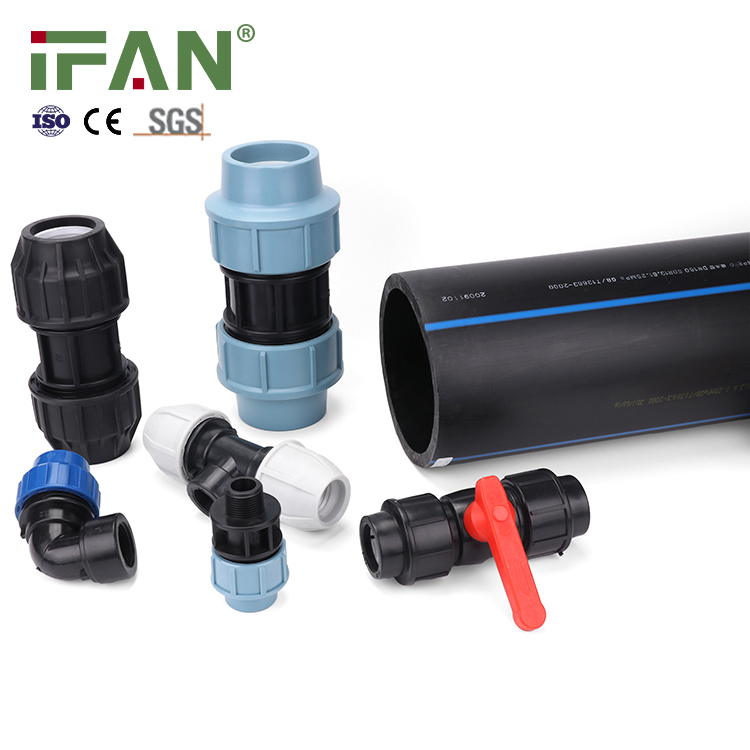
Dependable HDPE Fittings for Municipal Infrastructure
Introduction:
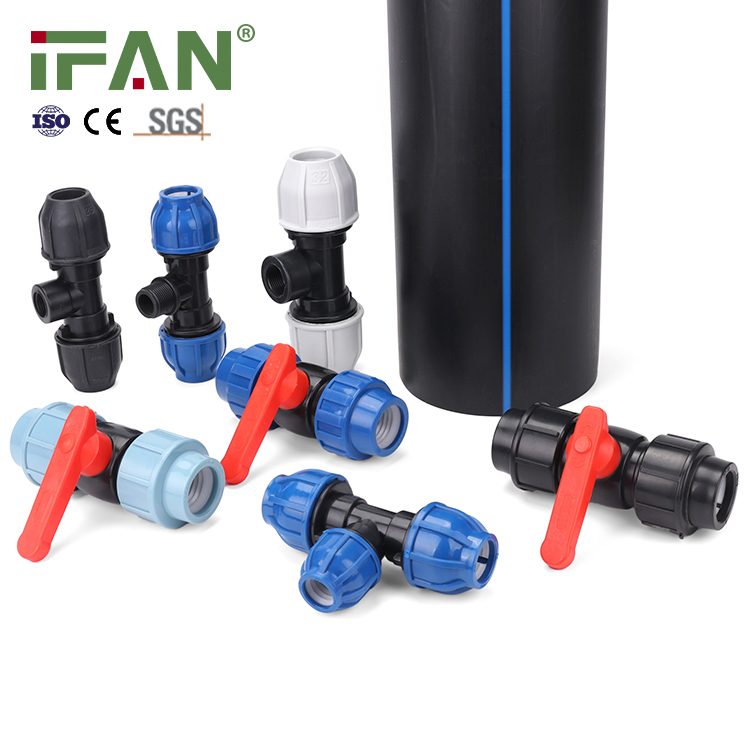
Municipal infrastructure plays a crucial role in everyday life by providing essential services like water, electricity, and gas to households and commercial establishments. Therefore, it is essential to invest in reliable fittings for these infrastructural components. High-Density Polyethylene (HDPE) Fittings have stood out as a leading material for municipal pipe fittings due to their durability and numerous significant benefits.
- Long-lasting Performance:
HDPE Fittings are crafted from high-grade polymers which offer exceptional resistance to corrosion and decay from pests and other environmental elements. This means that the fittings can endure the harsh weather conditions, chemicals, and fluids, making them a top choice for use in constructing municipal infrastructure. The result of using HDPE Fittings is a cost-effective, long-lasting, and safe way to keep municipal infrastructures up and running.
- Environmentally friendly:
Apart from their durability, HDPE Fittings are also environmentally friendly. They are constructed from recyclable material with a dimpled or smooth texture that ensures high friction in case of fluid flow. HDPE materials are safe for human use and pose no threats to the environment.
- Easy to Install:
HDPE fittings have a versatile range of connecting mechanisms, making them easy to install and compatible with various pipeline configurations. The adaptability of HDPE fittings makes them ideal for use in constructing diversified municipal infrastructures such as gas pipelines, water supply networks, and electrical installations, among others.
- Economical:
One of the most significant advantages of HDPE fittings is their competitive pricing compared to other materials like steel or copper. HDPE Fittings require very minimal maintenance, reducing the overall repair costs. They are also highly adaptable and easy to install, saving time and labor in installation.
Conclusion:
Dependable HDPE Fittings are an excellent option for constructing durable, environmentally friendly, and cost-effective municipal infrastructure. The materials used in making HDPE fittings are of high quality, durable, and reliable, making them a top choice for municipal infrastructure installations. Furthermore, HDPE Fittings are easy to install, versatile, and economical, ensuring that builders never have to compromise on quality or sustainability.